Application
Orthopedics & Sports Medicine
In-clinic imaging that shortens the diagnostic loop — cartilage, ligament and meniscus assessment, with reduced metal artifact for post-op follow-up.
Why it works
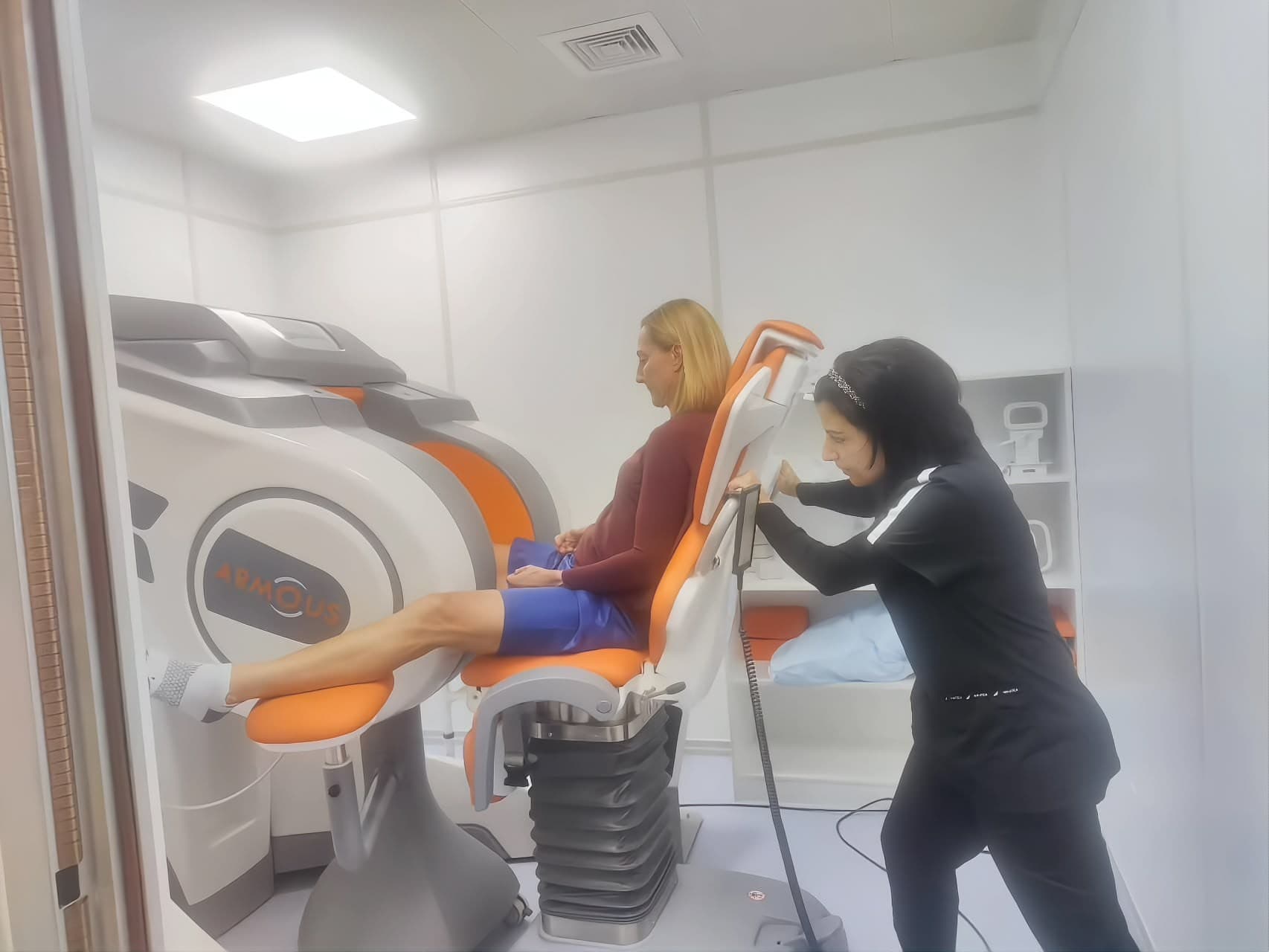
The setup.
Musculoskeletal work is where MRI demand is largest and most routine: in England, MSK and spine studies are 42% of all MRI examinations. That volume competes for the same shared scanner as everything else in the hospital, and the wait it creates is measured from the day of the injury.
A dedicated extremity system moves the examination into the clinic instead of the radiology department. It images the joint under load rather than flat on a table, and it uses a 0.25T open permanent magnet — no liquid helium, no cryogenic service, and a modular shielded enclosure of roughly 12 m² instead of a room built on site.
- A small modular enclosure rather than a full shielded room.
- Single-phase power and, in most sites, no floor reinforcement.
- Permanent magnet — no liquid helium, no cryogenic service.
- AI reconstruction and assisted reading to support sites without an on-staff radiologist.
The problem, in numbers
Why this needs its own machine.
Third-party figures, not our own — each one links back to a published source you can check.
1.71bn
people worldwide live with a musculoskeletal condition — the single largest contributor to years lived with disability.
WHO, Global Burden of Disease 2019
42%
of all MRI examinations in England are musculoskeletal — 26% spine and 16% limbs, in 2023/24.
NHS England Diagnostic Imaging Dataset, cited in Clinical Radiology (2025)
0.25T
is the field strength of the rotating permanent-magnet scanner used to show that medial meniscal extrusion is significantly greater standing than supine (p < 0.0001), and correlates with cartilage loss.
Skeletal Radiology
Imaging
Sample images.
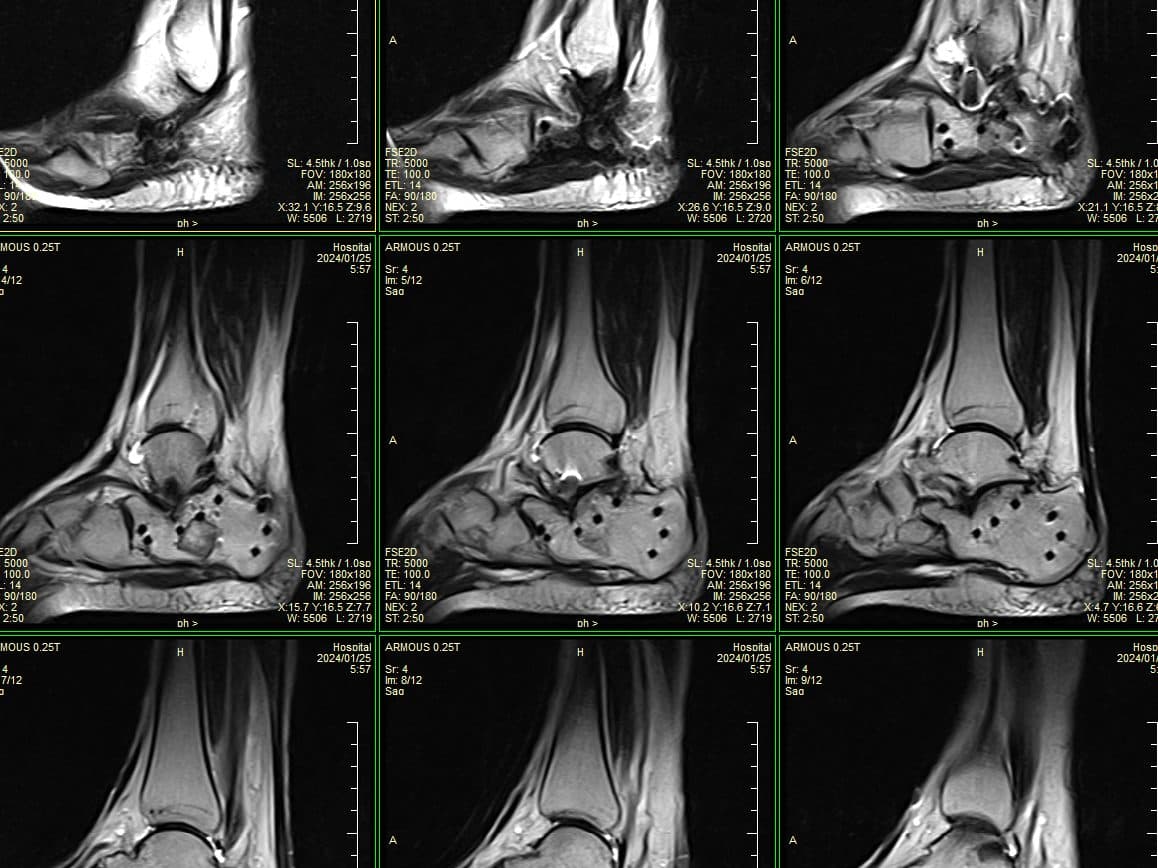
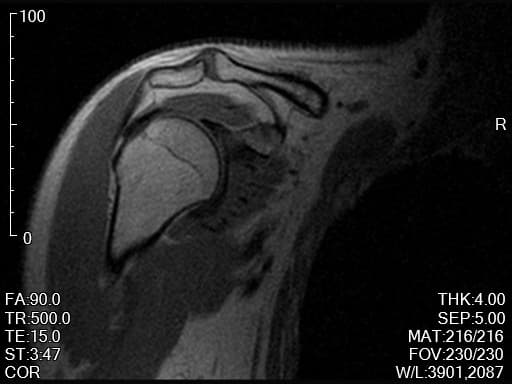
Clinical images require written authorization from the source institution and removal of patient identifiers.
Recommended systems
What we would suggest.
Talk to us about your site.
Tell us where the system needs to go and what you need to image. We will tell you what is possible.