Technology
Four modules. One machine that can leave the room.
A conventional MRI is defined by what surrounds it: a shielded room, a cryogenic system, a reinforced floor. Removing each of those constraints is a separate engineering project.
- Permanent
- Magnet type
- Modular
- Shielded enclosure
- AI
- Reconstruction
- CNN
- Denoising & super-resolution
Module 01
Magnet & Geometry
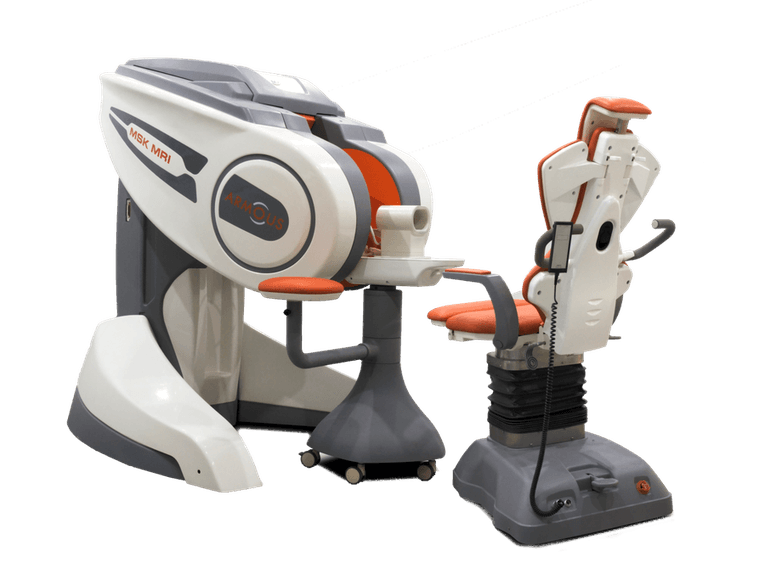
Permanent-magnet materials and open geometries that shrink the machine.
- NdFeB / SmCo permanent magnets — no liquid helium, no cryogenic cooling
- Halbach array and C-type / H-type open magnet geometry
- Weight and footprint reduced from the tonne class toward the transportable class
Module 02
EMI Cancellation
Sensing coils plus deep learning estimate and cancel ambient noise in real time.
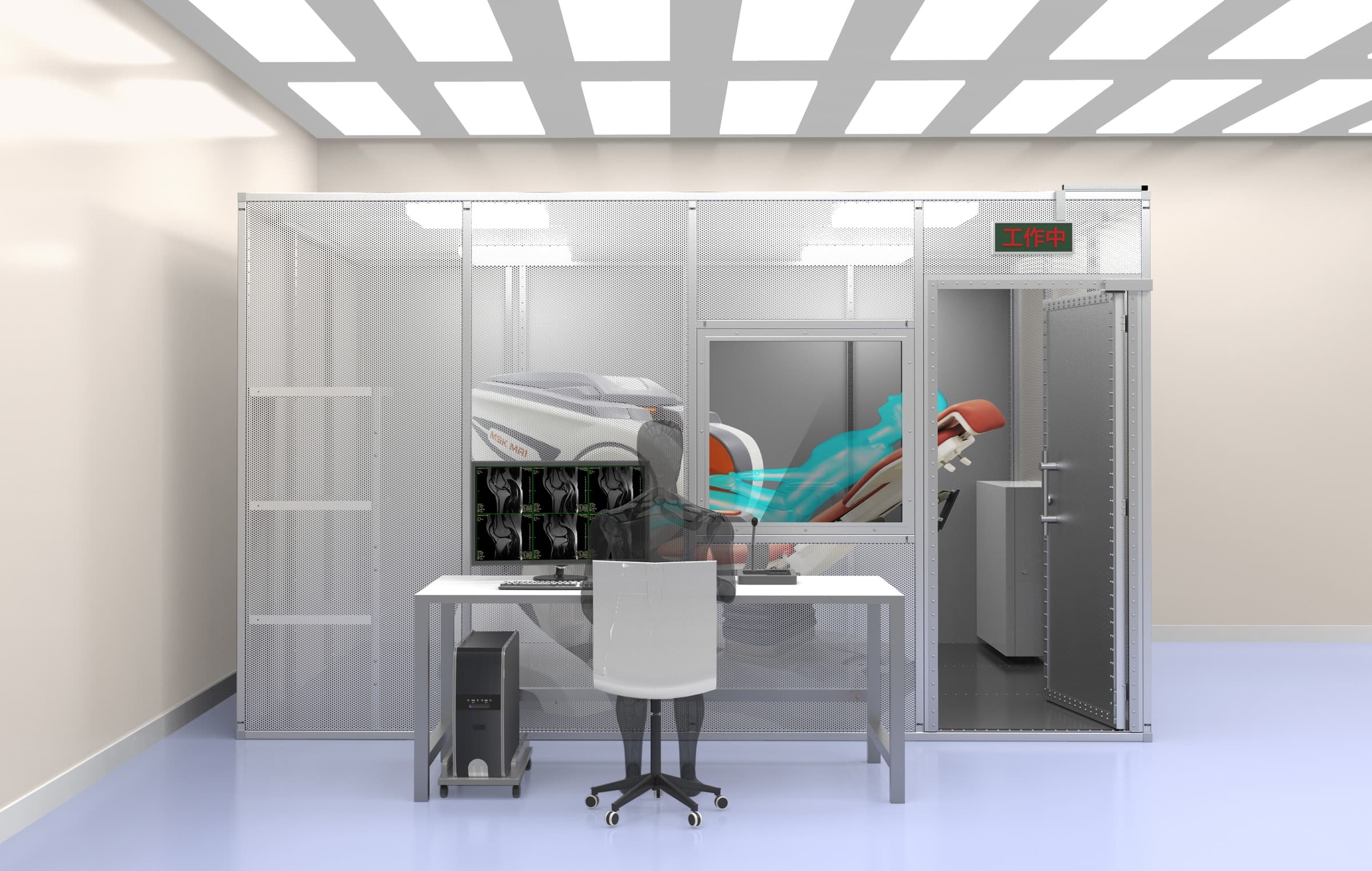
- A modular enclosure of roughly 12 m² rather than a 30 m² room built on site
- The enclosure ships as a product and installs in about three days
- This is the precondition for every mobile and trailer-based form
- Dynamic cancellation adapts to the noise environment on site
Modular
Shielded enclosure
Module 03
AI Reconstruction
Algorithms recover the signal-to-noise that the hardware does not provide.
- CNN denoising and super-resolution reconstruction
- Compressed sensing and parallel imaging
- Faster scanning at the same field strength

Module 04
AI-Assisted Reading
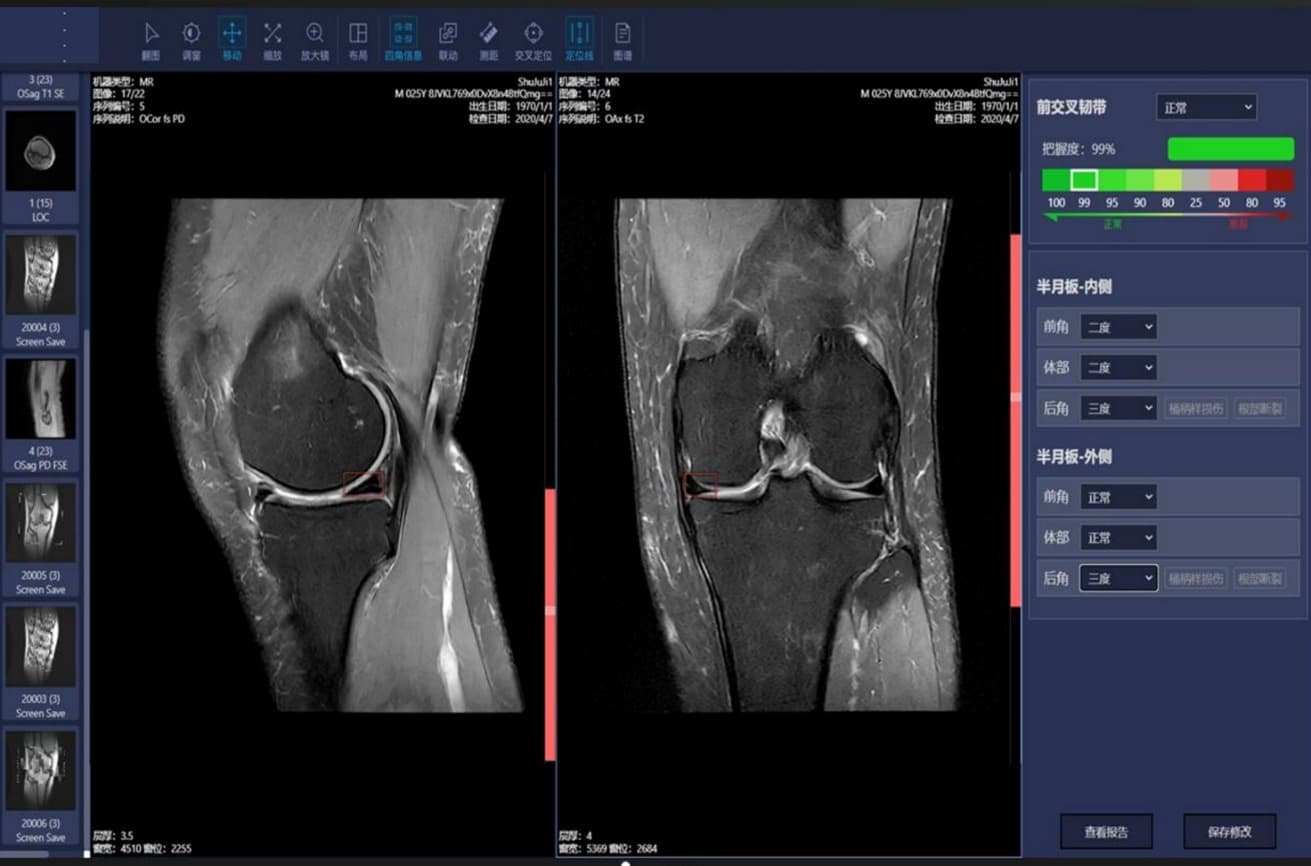
A first look for the clinician — lesion marking, quantification, structured report drafts.
- Built for sites without an on-staff radiologist
- Decision support — output is a prompt, not a diagnosis
- Regulatory status by market to be confirmed
Decision support
Intended use
Intended use
What the AI does — and what it does not.
Two different systems are often described with the same word. We keep them apart.
Reconstruction
Making the image usable
Denoising and super-resolution recover signal-to-noise the hardware does not provide. This is an engineering function — it changes the quality of the picture, not its interpretation.
Assisted reading
A first look for the clinician
Lesion marking, quantification and structured report drafts. Intended as decision support — the output is a prompt for a qualified reader, not a diagnosis.
Have a technical question?
Our engineering team answers directly. Send the constraint you are working against and we will tell you where the limits are.