Science & R&D
We build the machine, not just the brand on it.
Low-field MRI is an engineering problem before it is a product. Four problems had to be solved for a scanner to stop needing a shielded room built on site — and those four answers are what the system is made of.
What we actually do
A team of scientists and engineers.
This is the first thing worth establishing: who is behind the system.
We design the core
Magnet, coils, spectrometer and imaging sequences are developed in-house — the system is not a purchased machine in a new housing.
We publish and collaborate
Research collaboration with a Hong Kong-based research institute, and clinical validation work with medical partners.
We can build it at scale
Turning a laboratory prototype into a system that ships, installs and is serviced in the field is a separate discipline.
Technology platform
Four modules.
Each one exists because a physical constraint had to be removed before the machine could move.
Magnet & Geometry
Permanent-magnet materials and open geometries that shrink the machine.
- NdFeB / SmCo permanent magnets — no liquid helium, no cryogenic cooling
- Halbach array and C-type / H-type open magnet geometry
- Weight and footprint reduced from the tonne class toward the transportable class
EMI Cancellation
Sensing coils plus deep learning estimate and cancel ambient noise in real time.
Modular
Shielded enclosure
- A modular enclosure of roughly 12 m² rather than a 30 m² room built on site
- The enclosure ships as a product and installs in about three days
- This is the precondition for every mobile and trailer-based form
- Dynamic cancellation adapts to the noise environment on site
AI Reconstruction
Algorithms recover the signal-to-noise that the hardware does not provide.
- CNN denoising and super-resolution reconstruction
- Compressed sensing and parallel imaging
- Faster scanning at the same field strength
AI-Assisted Reading
A first look for the clinician — lesion marking, quantification, structured report drafts.
Decision support
Intended use
- Built for sites without an on-staff radiologist
- Decision support — output is a prompt, not a diagnosis
- Regulatory status by market to be confirmed
Inside the system
How the magnet gets smaller.
Illustrative cross-sections of the magnet geometry and the signal path.
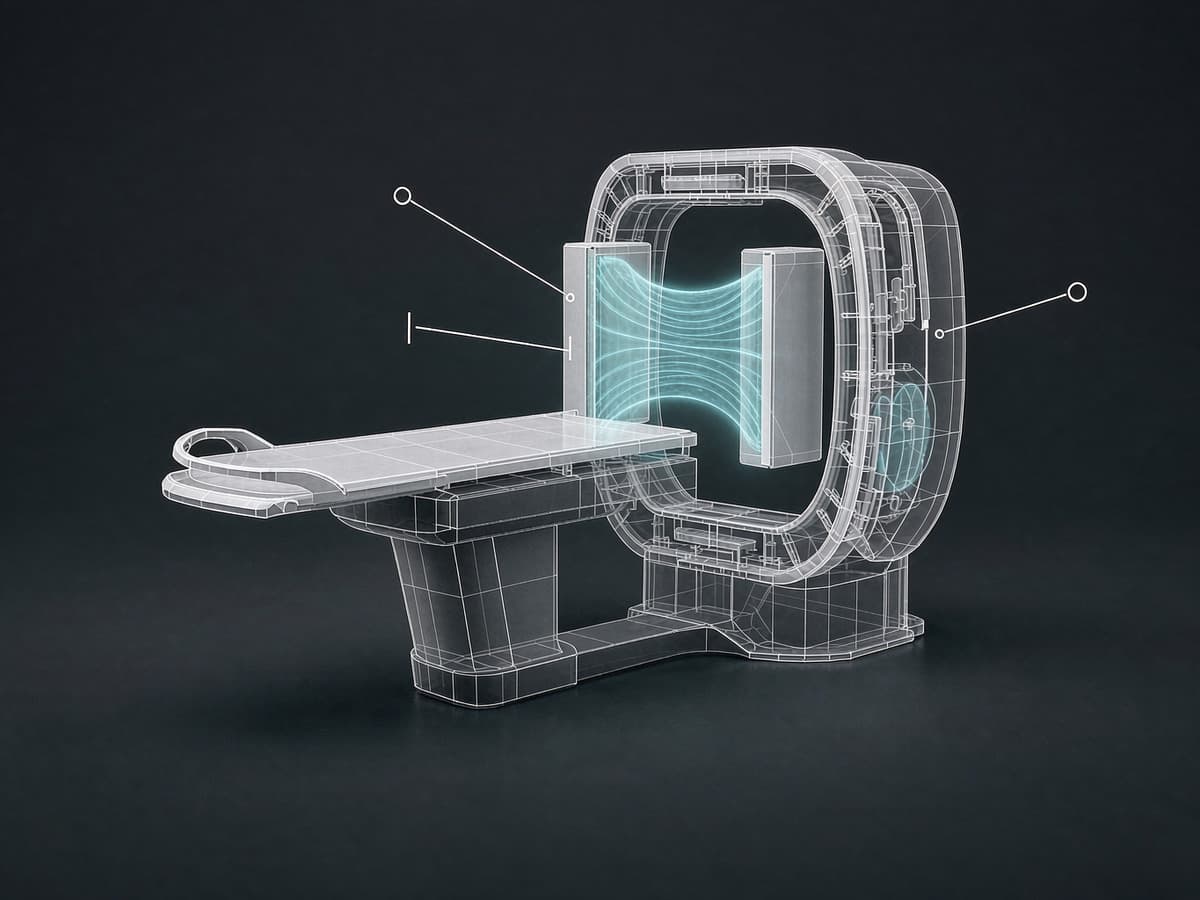
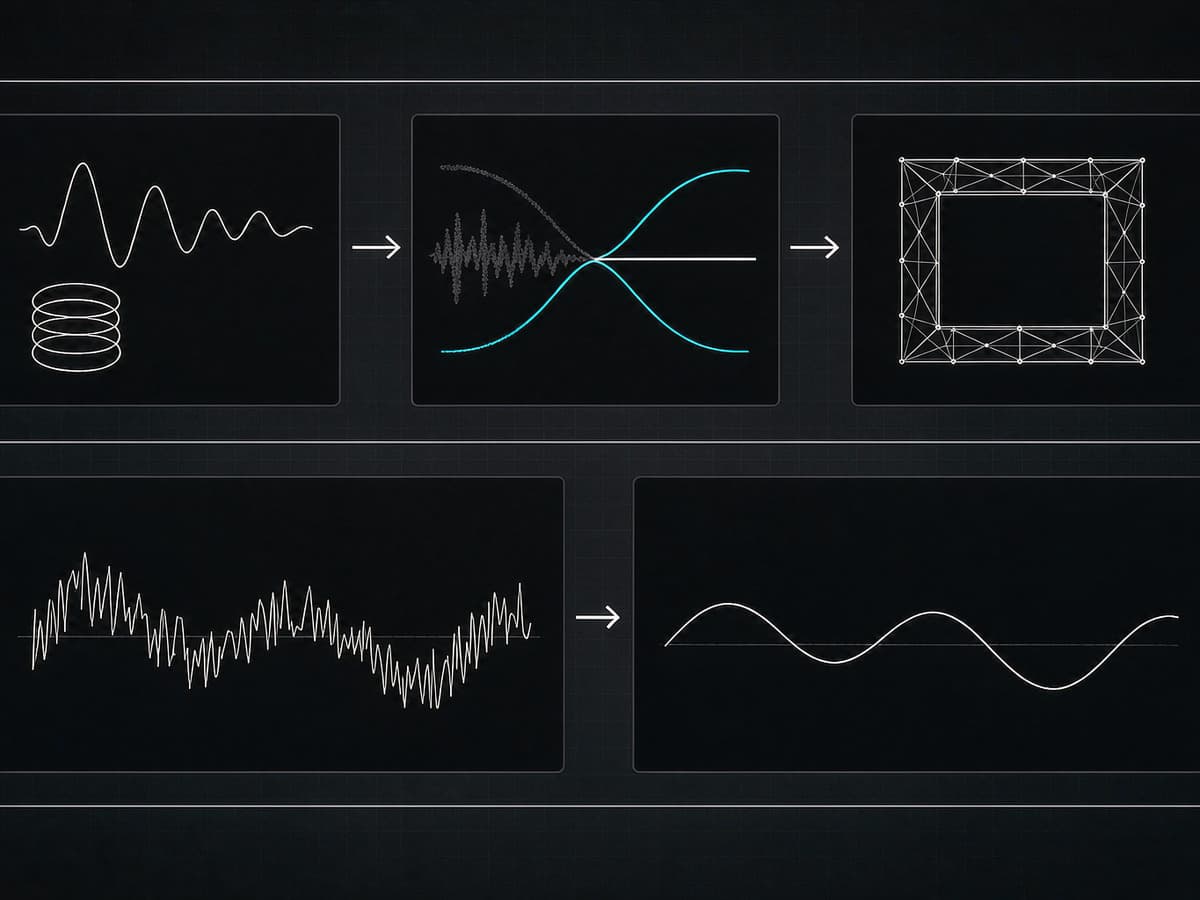
Schematics are illustrative. Published dimensions and performance figures are subject to confirmation by the engineering team.
Talk to us about your site.
Tell us where the system needs to go and what you need to image. We will tell you what is possible.